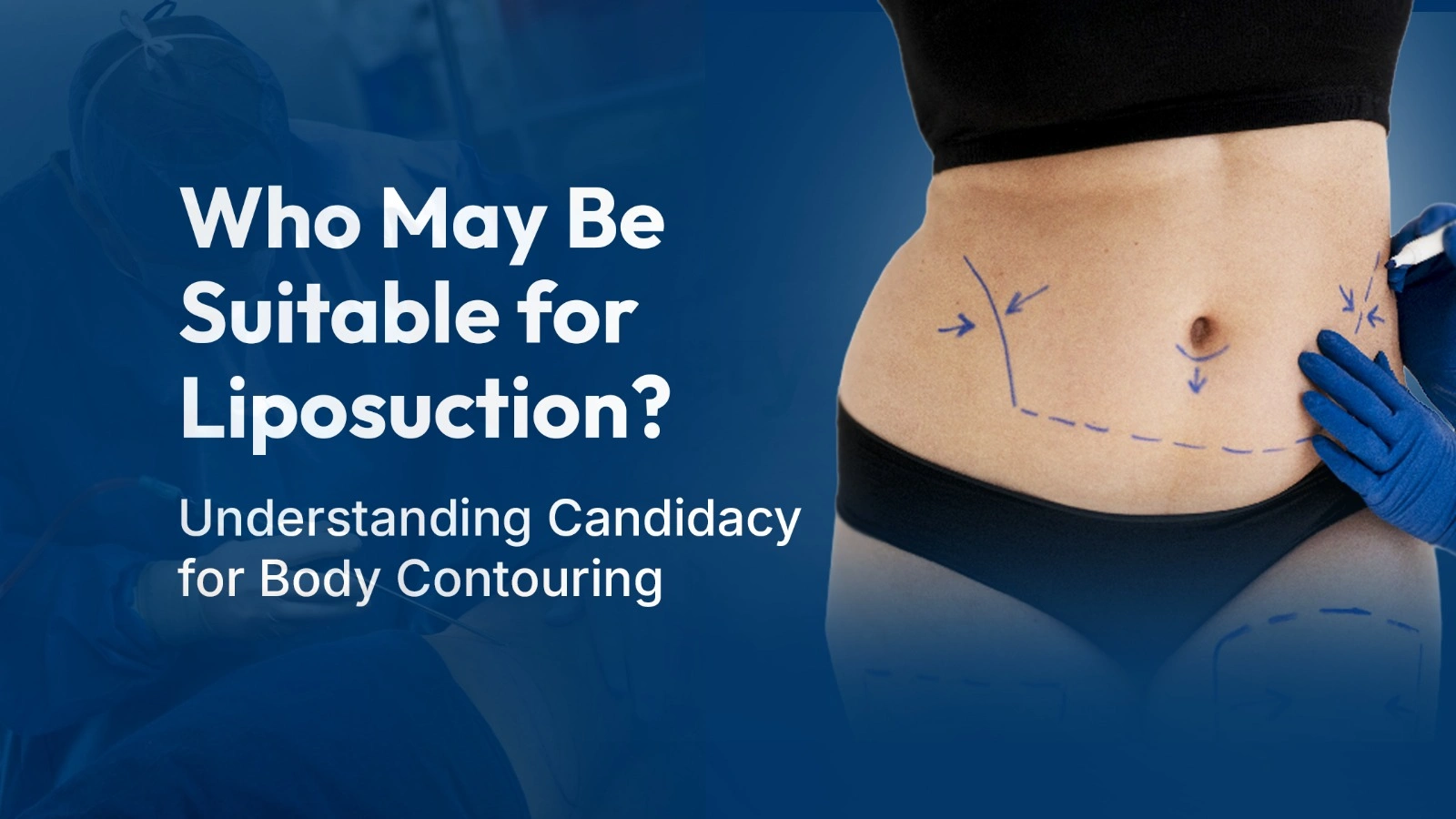
Who May Be Suitable for Liposuction? Understanding Candidacy for Body Contouring
Liposuction is one of the most widely performed aesthetic procedures worldwide, offering a reliable way to remove localised fat deposits and refine body shape. However, one of the most important factors in achieving excellent results is not the technique itself—but selecting the right patient.
Understanding who is (and is not) a suitable candidate for liposuction is essential for both safety and satisfaction. This guide explores the medical, anatomical, and lifestyle factors that determine whether liposuction is an appropriate option for body contouring.
Liposuction Is Not a Weight-Loss Procedure
A common misconception is that liposuction is a method for losing weight. In reality, it is a body contouring procedure, designed to target stubborn fat deposits that are resistant to diet and exercise.
From a scientific perspective, liposuction removes subcutaneous adipose tissue—fat stored beneath the skin. It does not treat:
- Visceral fat (fat surrounding internal organs)
- Metabolic conditions such as obesity or insulin resistance
For this reason, the most suitable candidates are typically individuals who are already close to their ideal body weight but wish to improve specific areas of contour.
Key Characteristics of a Good Candidate
Several clinical factors help determine whether liposuction is likely to produce safe and effective results.
- Localised, Diet-Resistant Fat Deposits
Ideal candidates have well-defined areas of fat that persist despite consistent lifestyle measures. These commonly include:
- Abdomen and flanks
- Thighs
- Arms
- Chin and neck
- Back
These fat deposits often have reduced responsiveness to lipolysis due to differences in receptor activity within fat cells, making them less likely to reduce through conventional weight loss alone.
- Good Skin Elasticity
Skin quality plays a critical role in the final outcome. After fat removal, the skin must contract to conform to the new contours.
This process depends on:
- Collagen and elastin integrity
- Age-related changes in dermal structure
- Genetic factors
Patients with firm, elastic skin tend to achieve smoother and more predictable results. Reduced elasticity may lead to residual skin laxity following fat removal.
- Stable Body Weight
Weight stability is important both before and after the procedure.
- Significant weight fluctuations can affect fat distribution
- Remaining fat cells can enlarge if weight is gained post-procedure
Maintaining a consistent weight helps preserve the contour achieved through liposuction.
- Good General Health
Liposuction is generally safe when performed appropriately, but candidates should be in good overall health.
Important considerations include:
- Absence of uncontrolled medical conditions
- Good cardiovascular status
- No active infections or impaired wound healing
A thorough medical assessment is essential prior to treatment.
- Realistic Expectations
Liposuction can produce significant improvements in shape and proportion, but it has limitations.
Suitable candidates understand that:
- It enhances contour rather than perfection
- It does not tighten severely loose skin
- It is not a substitute for a healthy lifestyle
Clear expectations are strongly associated with higher satisfaction rates.
Who May Not Be an Ideal Candidate?
Liposuction may not be appropriate in certain situations, including:
- Individuals seeking significant weight loss
- Patients with predominantly visceral (intra-abdominal) fat
- Poor skin elasticity or significant skin excess
- Uncontrolled medical conditions
- Unrealistic expectations about outcomes
In such cases, alternative or combined treatments may be more suitable.
The Role of Fat Biology in Candidacy
Adipose tissue is not uniform throughout the body. Differences in fat cell biology influence how fat behaves and responds to treatment.
For example:
- Areas such as the abdomen and flanks often have higher alpha-2 adrenergic receptor activity, which inhibits fat breakdown
- This contributes to the persistence of “stubborn fat”
Liposuction bypasses these biological limitations by physically removing fat cells. Once removed, these cells do not regenerate in significant numbers, although remaining fat cells can still expand with weight gain.
Commonly Treated Areas
Candidates suitable for liposuction often seek treatment in one or more of the following regions:
- Abdomen and waist
- Thighs (inner and outer)
- Arms
- Back and flanks
- Chest (including male chest contouring)
- Chin and neck
The choice of area depends on individual anatomy and aesthetic goals.
The Importance of Personalised Assessment
No two patients are the same. A comprehensive consultation is essential to assess:
- Fat distribution
- Skin quality
- Underlying anatomy
- Medical history
- Desired outcomes
This allows for a tailored treatment plan that maximises both safety and aesthetic results.
Final Thoughts
Liposuction is a highly effective tool for body contouring—but its success depends heavily on selecting the right candidate. Patients who are near their ideal weight, in good health, and seeking targeted fat reduction tend to achieve the best outcomes.
A personalised, medically informed approach ensures that treatment is not only effective but also aligned with each individual’s anatomy and goals. For those who meet the criteria, liposuction can offer a lasting improvement in body shape and confidence.