
Abdomen 360 Liposuction Explained: How It Helps Improve Midsection Contour
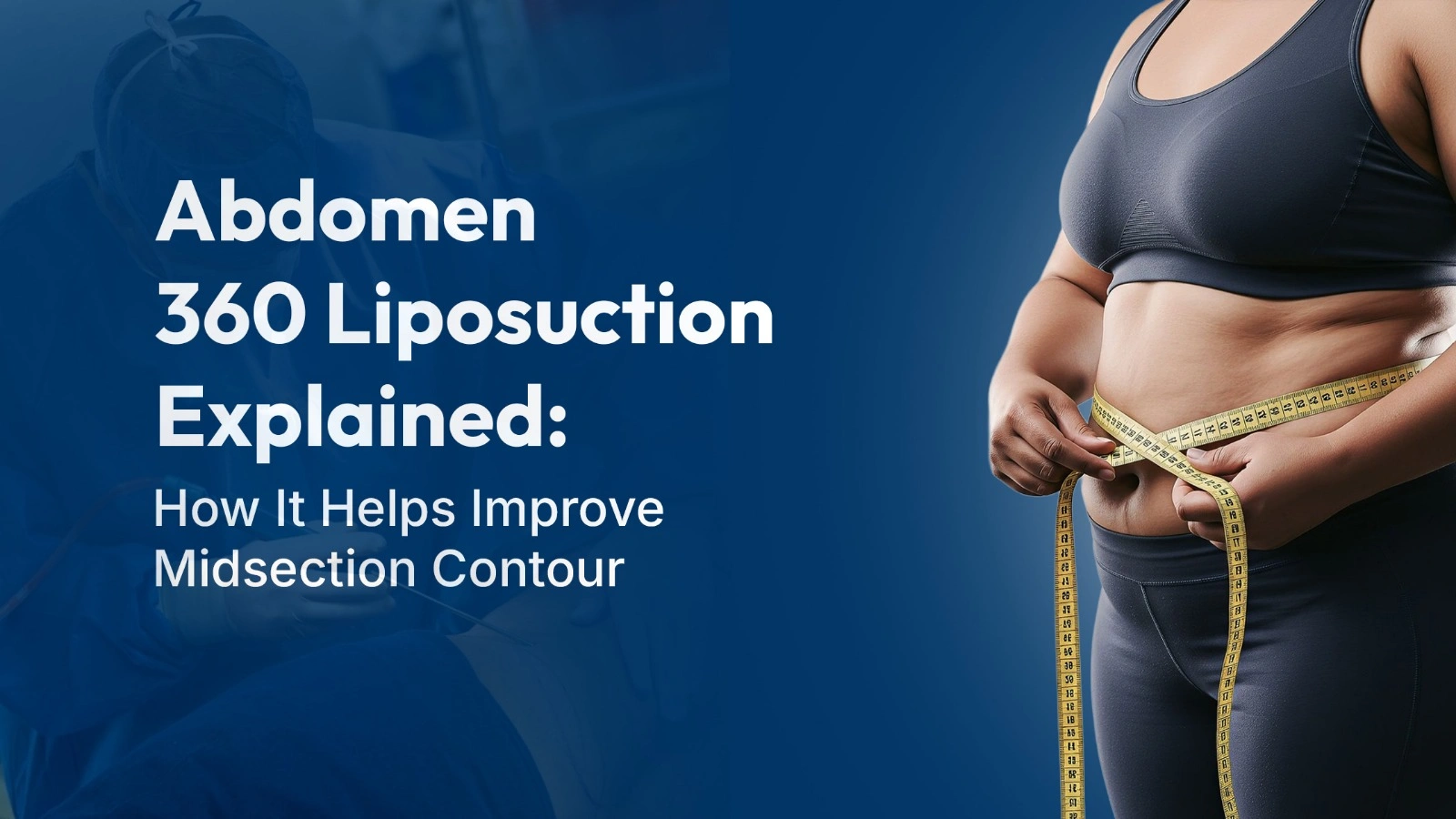
Achieving a well-contoured midsection is one of the most common goals in aesthetic medicine. However, traditional approaches to fat removal have often focused only on the front of the abdomen—sometimes leading to incomplete or less natural-looking results. Abdomen 360 liposuction represents a more comprehensive and anatomically informed approach, treating the entire circumferential midsection for balanced, three-dimensional contouring.
What Is Abdomen 360 Liposuction?
Abdomen 360 liposuction (also referred to as circumferential abdominal liposuction) is an advanced body contouring technique that targets fat deposits around the entire torso. Rather than focusing solely on the anterior abdomen, this approach includes:
- Upper and lower abdomen
- Flanks (“love handles”)
- Lateral waist
- Lower back and lumbar fat pads
By addressing the full circumference of the midsection, the procedure enhances the natural waistline and creates a more harmonious transition between the abdomen, flanks, and back.
The Scientific Basis of Circumferential Contouring
Fat distribution in the abdominal region is influenced by genetics, hormones, and metabolic factors. Subcutaneous adipose tissue—the layer of fat located beneath the skin—is often resistant to caloric restriction and exercise due to differences in adipocyte receptor activity.
Specifically:
- Abdominal fat tends to have a higher proportion of alpha-2 adrenergic receptors, which inhibit lipolysis
- This makes localised fat more resistant to breakdown compared to other areas
Liposuction physically removes these fat cells, bypassing the body’s metabolic resistance mechanisms. Once removed, adipocytes do not regenerate in significant numbers, allowing for long-term contour improvement—provided weight remains stable.
Why a 360° Approach Matters
The human torso is a three-dimensional structure, and contour irregularities often arise when only one region is treated. Isolated anterior liposuction may flatten the abdomen but leave persistent fullness in the flanks or lower back, which can obscure waist definition.
Abdomen 360 liposuction improves outcomes by:
- Enhancing waist-to-hip ratio through flank reduction
- Reducing posterior fat bulk, improving side profile and posture silhouette
- Creating continuous contour lines across the anterior, lateral, and posterior torso
- Improving light reflection and shadowing, which contributes to a more athletic appearance
From a visual and anatomical standpoint, the waist is defined more by the reduction of surrounding fat than by the abdomen alone.
Procedural Technique: A Closer Look
The procedure is typically performed under tumescent local anaesthesia, sometimes combined with sedation. The technique involves several key steps:
- Tumescent Infiltration
A solution containing dilute local anaesthetic, adrenaline (epinephrine), and saline is infiltrated into the subcutaneous fat. This provides:
– Analgesia
– Vasoconstriction (reducing bleeding)
– Hydrodissection (separating fat for easier removal)
- Energy-Assisted Fat Emulsification (Optional)
Technologies such as ultrasound-assisted liposuction (e.g., VASER) may be used to selectively disrupt adipocytes. Ultrasound energy induces cavitation, forming microbubbles that collapse and mechanically break down fat cell membranes while sparing surrounding connective tissue.
- Aspiration and Sculpting
Fine cannulas are used to remove emulsified fat in a controlled, layered fashion. Surgeons often employ cross-tunnelling techniques to ensure even fat removal and minimise contour irregularities.
- Three-Dimensional Sculpting
Attention is given not only to fat removal but also to the preservation of superficial fat layers where appropriate. This helps maintain smooth transitions and avoid over-resection, which can lead to deformities.
Skin Retraction and Tissue Response
One of the key determinants of final outcome is skin contraction following fat removal. Several mechanisms contribute to this process:
- Elastic recoil of dermal collagen and elastin fibres
- Fibroblast activation, leading to new collagen synthesis
- In energy-assisted techniques, thermal effects may promote dermal tightening
Patients with good baseline skin elasticity tend to achieve the most favourable results. In cases of significant skin laxity, adjunctive procedures may be considered.
Who Is an Ideal Candidate?
Abdomen 360 liposuction is best suited for patients who:
- Are close to their ideal body weight
- Have localised, pinchable subcutaneous fat
- Maintain good skin quality and elasticity
- Seek improved contour rather than weight loss
It is important to distinguish subcutaneous fat (which can be removed) from visceral fat, which lies within the abdominal cavity and is not addressed by liposuction.
Recovery and Outcomes
Post-procedure recovery involves:
- Mild to moderate swelling and bruising
- Use of compression garments to support tissue adherence and reduce oedema
- Early mobilisation to promote circulation
Most patients return to normal daily activities within a few days, although full recovery and final contour refinement may take several weeks to months.
Results evolve gradually as swelling subsides and tissues contract.
The circumferential approach typically produces:
- A more defined waistline
- Improved abdominal flatness
- Enhanced overall body proportions
Safety Considerations
As with all surgical procedures, safety depends on appropriate patient selection, meticulous technique, and adherence to established clinical protocols.
Key considerations include:
- Limiting total aspirate volume within safe guidelines
- Maintaining fluid balance
- Avoiding over-resection in superficial planes
- Ensuring careful post-operative monitoring
When performed by experienced clinicians, abdomen 360 liposuction is a safe and effective method for comprehensive midsection contouring.
Final Thoughts
Abdomen 360 liposuction reflects a shift toward more holistic, anatomically precise body contouring. By treating the entire midsection rather than isolated areas, it delivers more balanced, natural-looking results.
For patients seeking meaningful improvement in waist definition and torso shape, this comprehensive approach offers a scientifically grounded and highly effective solution—provided it is tailored to individual anatomy and performed with expertise.